

Custom wire mesh work depends on more than a verbal product name. The manufacturing route may be influenced by material, wire condition, opening, panel or roll size, edge treatment, forming, finish and downstream fabrication. Production records give those choices a traceable place and help distinguish an approved change from an informal conversation that should not control the order.
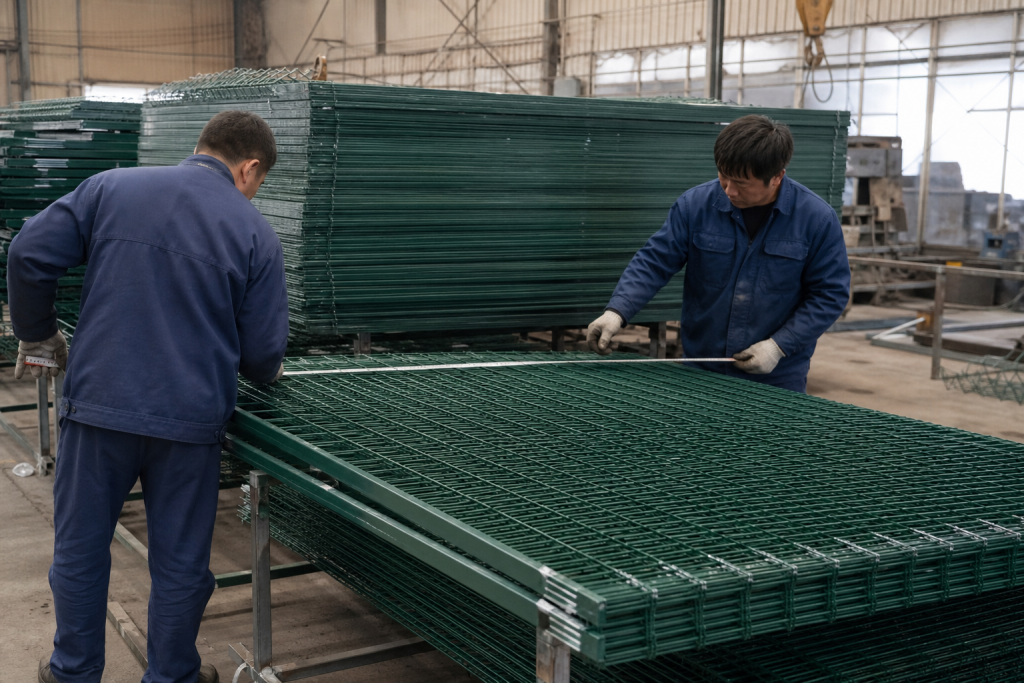

This factory note explains the decisions and records that help a buyer connect an approved requirement with production, inspection and dispatch. It describes a practical sourcing route rather than a claim about a particular order, customer or test programme.
Start from the approved specification
The approved specification is the reference point for production and inspection. It should be clear whether a customer drawing, BOHANG drawing, written schedule or confirmed sample controls each characteristic.
A useful review asks which document has approval status, how revision changes are recorded, and which dimensions remain subject to confirmation. Recording those points in the same schedule reduces assumptions between the product description, the drawing, the quotation and the packing list. It also makes later revisions easier to identify because the reason for each selection remains visible.
Do not combine conflicting values from multiple documents; resolve the difference and issue one controlled basis for manufacture. For procurement, the important boundary is to separate a nominal product description from the values that are actually approved for manufacture. Where site conditions, standards or calculations govern the result, the responsible designer or buyer should confirm them before production release.
Material and geometry records
Material description, wire size, mesh geometry and finished form need consistent terminology. A woven roll, welded panel and fabricated mesh component require different records because their production variables and measurement methods differ.
A useful review asks which material designation is requested, how wire and opening are stated, and whether edges frames or bends are included. Recording those points in the same schedule reduces assumptions between the product description, the drawing, the quotation and the packing list. It also makes later revisions easier to identify because the reason for each selection remains visible.
Use product-specific fields instead of forcing unlike mesh constructions into one generic inspection line. For procurement, the important boundary is to separate a nominal product description from the values that are actually approved for manufacture. Where site conditions, standards or calculations govern the result, the responsible designer or buyer should confirm them before production release.
In-process references
An in-process record can show that the current production stage still matches the approved route before more value is added through forming, coating or fabrication. It is most useful when it captures a decision point rather than repeating the final certificate.
A useful review asks which stage can still be corrected, what sample or measurement represents the batch, and who reviews a nonconforming result. Recording those points in the same schedule reduces assumptions between the product description, the drawing, the quotation and the packing list. It also makes later revisions easier to identify because the reason for each selection remains visible.
Place checkpoints before irreversible or costly stages so a mismatch is not carried into the finished order. For procurement, the important boundary is to separate a nominal product description from the values that are actually approved for manufacture. Where site conditions, standards or calculations govern the result, the responsible designer or buyer should confirm them before production release.
Final count and packing records
Finished quantity, package count and item identification close the loop between production and dispatch. If partial packages, spares or replacement pieces are included, their relationship to the main order should be explicit.
A useful review asks how finished pieces are counted, where package quantities are recorded, and how spares and partial bundles are labelled. Recording those points in the same schedule reduces assumptions between the product description, the drawing, the quotation and the packing list. It also makes later revisions easier to identify because the reason for each selection remains visible.
Reconcile physical count, packing list and dispatch record before release rather than relying on an estimated production quantity. For procurement, the important boundary is to separate a nominal product description from the values that are actually approved for manufacture. Where site conditions, standards or calculations govern the result, the responsible designer or buyer should confirm them before production release.
Questions to confirm before production release
A custom order is ready for controlled production when the following references point to the same requirement. A concise schedule is more useful than a long message with missing values, so mark unknown items clearly and attach the drawing, bill of quantities or reference image that controls the discussion.
- Approved specification or drawing
- Current revision and item code
- Material and mesh construction
- Finished form and edge treatment
- Inspection and document requirement
- Quantity packing and destination details
Clear records give both parties a practical way to review changes and reduce ambiguity without claiming that documentation alone guarantees product suitability. When one of these values is not fixed, state the decision owner and the date by which it is needed. That keeps an open technical question from becoming an unrecorded production assumption.
Continue the sourcing review
The required record set varies by product and contract; certificates or inspection plans should never be implied unless they are included in the approved scope. Use the related BOHANG routes below to compare the relevant product family, application context and supply capability before sending the final inquiry.
- See the manufacturing capability overview
- Review BOHANG quality-control capabilities
- Request catalogues and technical files
- Send a project or product brief
For a quotation, provide the intended use, dimensions or product schedule, quantity, finish, destination and required delivery timing. BOHANG can then review the available manufacturing and supply route against the information provided.

