

A nominal wire mesh value identifies the intended construction, but it does not explain how much variation is acceptable or how an inspector should measure it. Tolerance, method, sample position and acceptance rule need to be read together. This is especially important when coating, weave form, welded edges or fabrication can change the way a finished value is observed.
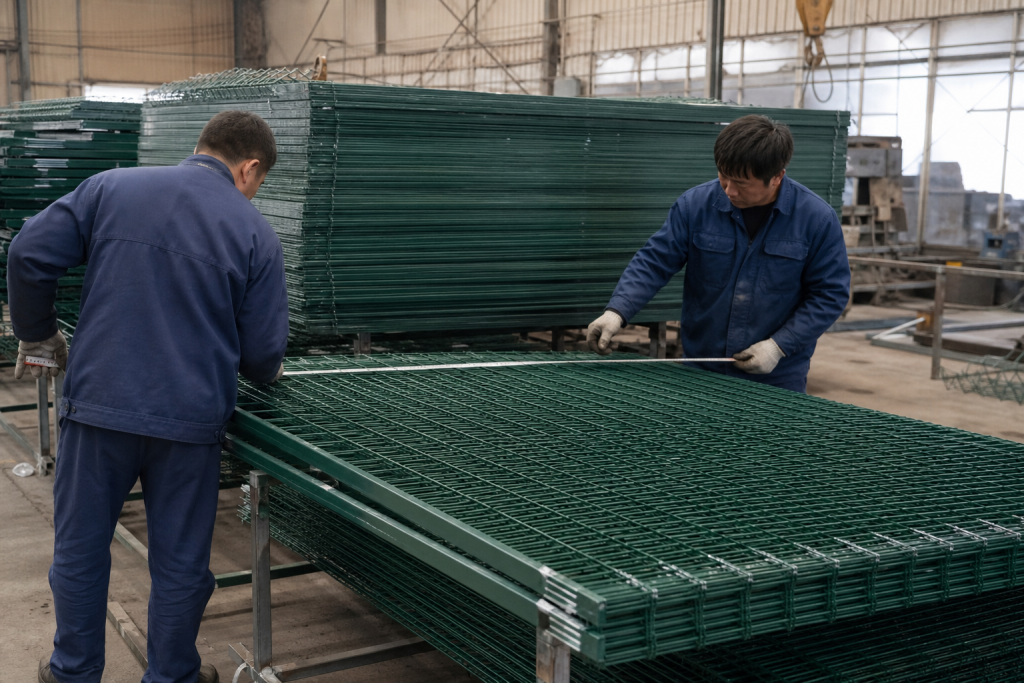

This procurement guide organises the information that usually moves between buyer, technical reviewer, production and logistics teams. It is a preparation tool, not a substitute for the approved contract documents.
Nominal values and tolerances
Nominal dimensions are targets used to describe the product, while tolerances define the permitted range around them. A schedule should make clear whether the tolerance applies to wire, clear aperture, pitch, panel size, diagonals or another finished characteristic.
A useful review asks which value controls function, whether limits are unilateral or bilateral, and which standard drawing or contract defines acceptance. Recording those points in the same schedule reduces assumptions between the product description, the drawing, the quotation and the packing list. It also makes later revisions easier to identify because the reason for each selection remains visible.
State tolerances beside their nominal values and avoid applying one general percentage to unlike product characteristics. For procurement, the important boundary is to separate a nominal product description from the values that are actually approved for manufacture. Where site conditions, standards or calculations govern the result, the responsible designer or buyer should confirm them before production release.
Measurement method
Tool choice, sample length, measurement location and product condition affect results. Counting multiple openings may provide a better view of pitch consistency, while finished wire measurement may be influenced by coating and wire shape.
A useful review asks which instrument is appropriate, where on the mesh the reading is taken, and whether coating is included in the stated value. Recording those points in the same schedule reduces assumptions between the product description, the drawing, the quotation and the packing list. It also makes later revisions easier to identify because the reason for each selection remains visible.
Document the method before inspection and use the same basis for supplier and buyer checks. For procurement, the important boundary is to separate a nominal product description from the values that are actually approved for manufacture. Where site conditions, standards or calculations govern the result, the responsible designer or buyer should confirm them before production release.
Weld and edge inspection
Welded intersections, cut wires, selvedges, hooks, frames and formed edges require visual and dimensional criteria suited to their construction. A central mesh sample cannot represent every edge or fabrication detail.
A useful review asks which weld features are visually unacceptable, how edge dimensions are controlled, and where fabrication transitions need separate checks. Recording those points in the same schedule reduces assumptions between the product description, the drawing, the quotation and the packing list. It also makes later revisions easier to identify because the reason for each selection remains visible.
Break complex products into inspectable zones so mesh geometry and fabricated interfaces are both reviewed. For procurement, the important boundary is to separate a nominal product description from the values that are actually approved for manufacture. Where site conditions, standards or calculations govern the result, the responsible designer or buyer should confirm them before production release.
Coating checks and records
Surface treatment may require appearance, adhesion, coverage, thickness or process documentation depending on the approved scope. The relevant checks differ for galvanized, powder-coated and other finishes.
A useful review asks which coating route is specified, what inspection or certificate is contractually required, and how repaired or contact areas are handled. Recording those points in the same schedule reduces assumptions between the product description, the drawing, the quotation and the packing list. It also makes later revisions easier to identify because the reason for each selection remains visible.
Request only the records that match the agreed finish and test scope, and identify them before production release. For procurement, the important boundary is to separate a nominal product description from the values that are actually approved for manufacture. Where site conditions, standards or calculations govern the result, the responsible designer or buyer should confirm them before production release.
Acceptance checklist
An inspection requirement is clear when another competent reviewer can repeat it on the same basis. A concise schedule is more useful than a long message with missing values, so mark unknown items clearly and attach the drawing, bill of quantities or reference image that controls the discussion.
- Nominal value and permitted tolerance
- Measurement tool location and sample length
- Sampling frequency or inspection lot
- Weld edge and fabrication criteria
- Coating condition and document scope
- Deviation review and approval route
The objective is a practical acceptance schedule that reduces contradictory readings without implying that every order needs the same inspection plan. When one of these values is not fixed, state the decision owner and the date by which it is needed. That keeps an open technical question from becoming an unrecorded production assumption.
Continue the sourcing review
Applicable standards, sampling plans and acceptance criteria must come from the approved contract, product specification or responsible project authority. Use the related BOHANG routes below to compare the relevant product family, application context and supply capability before sending the final inquiry.
- Review BOHANG quality-control capabilities
- Request catalogues and technical files
- Browse BOHANG product systems
- Send a project or product brief
For a quotation, provide the intended use, dimensions or product schedule, quantity, finish, destination and required delivery timing. BOHANG can then review the available manufacturing and supply route against the information provided.

