

Project dossier
Project context
Application background, visual evidence and technical selection data are presented as one project record.
An anonymised project case used to coordinate a logistics-facility perimeter brief.
- Application
- Industrial perimeter
- Application
- Logistics and warehouse boundary
- Application
- Controlled access
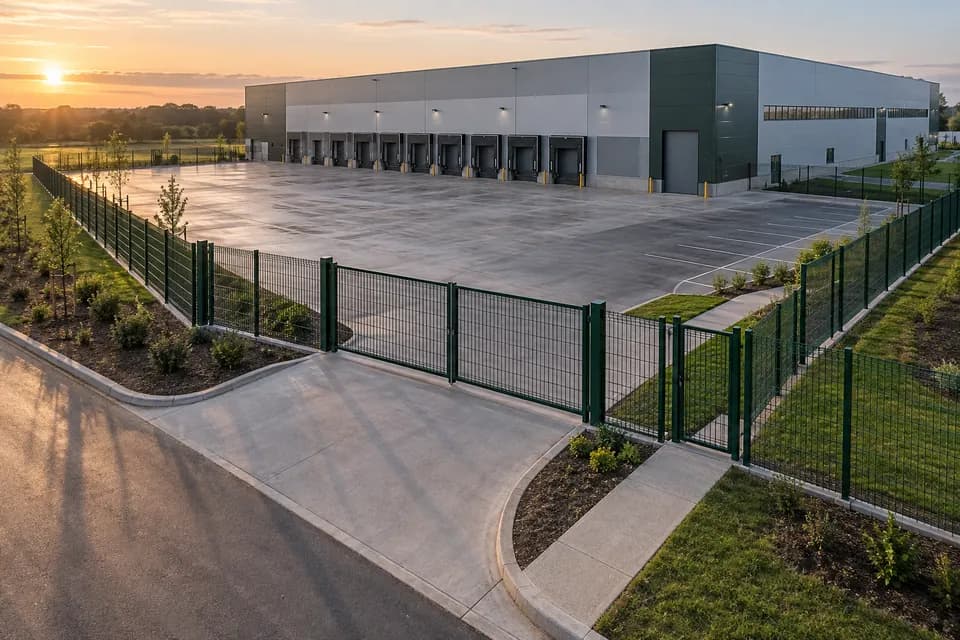
This project case shows how a buyer might organise an industrial perimeter package for a logistics facility. It is not a record of a named customer or verified installed site. The example focuses on translating a boundary drawing into panel runs, posts, gates, transitions, accessories and packages that can be quoted and received as one coordinated system.
This is a project case for sourcing discussion only. It does not identify a named customer, a verified installation, a project location or a completed BOHANG contract. Final engineering and site approval remain with the responsible project team.
Reference context
The illustrative site includes long visible boundary runs, vehicle entrances, pedestrian access and interfaces with buildings or hardstanding. Operations continue inside the perimeter, so gate use, sightlines and maintenance access influence the brief.
A useful review asks which boundary function is required, where vehicles and pedestrians cross, and which site interfaces interrupt standard runs. Recording those points in the same schedule reduces assumptions between the product description, the drawing, the quotation and the packing list. It also makes later revisions easier to identify because the reason for each selection remains visible.
Use the actual site risk assessment and civil layout to replace these illustrative assumptions before selecting a final system. For procurement, the important boundary is to separate a nominal product description from the values that are actually approved for manufacture. Where site conditions, standards or calculations govern the result, the responsible designer or buyer should confirm them before production release.
Boundary and access scope
A line schedule separates standard fence runs from corners, level changes, gate openings and wall connections. It also identifies whether height, mesh density or topping provisions change around the route.
A useful review asks how each run is measured, which openings need clear dimensions, and where special transitions or removable access occur. Recording those points in the same schedule reduces assumptions between the product description, the drawing, the quotation and the packing list. It also makes later revisions easier to identify because the reason for each selection remains visible.
Assign item codes to repeatable modules and separate custom pieces so the bill of quantities remains traceable. For procurement, the important boundary is to separate a nominal product description from the values that are actually approved for manufacture. Where site conditions, standards or calculations govern the result, the responsible designer or buyer should confirm them before production release.
System components
Panels, posts, clamps or cover strips, fixings and gates need compatible dimensions and finishes. Gate posts and hardware often differ from standard intermediate posts and should be listed explicitly.
A useful review asks which post supports each panel and gate, how foundations or base plates are defined, and which small fittings complete each opening. Recording those points in the same schedule reduces assumptions between the product description, the drawing, the quotation and the packing list. It also makes later revisions easier to identify because the reason for each selection remains visible.
Review the package as a connected system and avoid pricing panels without their required support and access components. For procurement, the important boundary is to separate a nominal product description from the values that are actually approved for manufacture. Where site conditions, standards or calculations govern the result, the responsible designer or buyer should confirm them before production release.
Packing by installation zone
If the boundary is built in phases, package labels can follow zones or line references. Gate hardware and special panels should remain visible within that schedule rather than disappearing into general accessory boxes.
A useful review asks which zone installs first, what unloading equipment is available, and how packages are staged without finish damage. Recording those points in the same schedule reduces assumptions between the product description, the drawing, the quotation and the packing list. It also makes later revisions easier to identify because the reason for each selection remains visible.
Agree zone labels before packing and use the same references on drawings, packing lists and physical packages. For procurement, the important boundary is to separate a nominal product description from the values that are actually approved for manufacture. Where site conditions, standards or calculations govern the result, the responsible designer or buyer should confirm them before production release.
Sourcing checklist
Replace the illustrative assumptions with the project-controlled information below. A concise schedule is more useful than a long message with missing values, so mark unknown items clearly and attach the drawing, bill of quantities or reference image that controls the discussion.
- Boundary plan lengths and level changes
- Required height mesh and finish
- Panel post and fixing module
- Vehicle and pedestrian gate schedule
- Corners walls services and transitions
- Zone packing destination and delivery sequence
The reference helps structure a first bill of quantities without implying a completed design, security rating or installation outcome. When one of these values is not fixed, state the decision owner and the date by which it is needed. That keeps an open technical question from becoming an unrecorded production assumption.
Continue the sourcing review
This project case must be checked against the responsible designer’s calculations, local requirements, foundations, gate controls and final installation plan. Use the related BOHANG routes below to compare the relevant product family, application context and supply capability before sending the final inquiry.
- Review perimeter and barrier systems
- Open the perimeter security guide
- Review project cases
- Send a project or product brief
For a quotation, provide the intended use, dimensions or product schedule, quantity, finish, destination and required delivery timing. BOHANG can then review the available manufacturing and supply route against the information provided.
Technical brief
Products and specifications
Boundary system
- Mesh panels
- Confirm against the project brief
- Intermediate and gate posts
- Confirm against the project brief
- Fixings and cover details
- Confirm against the project brief
Access and delivery
- Vehicle and pedestrian gates
- Confirm against the project brief
- Transition pieces
- Confirm against the project brief
- Zone-based packing
- Confirm against the project brief